If you’ve never seen a pair of tabi before, they can look a bit strange at first, like a sock that decided to split one toe off on its own and fully commit to it.
But that split isn’t a gimmick, and it’s not decorative. Tabi have been worn in Japan for centuries, originally paired with sandals like waraji or zori, and that separation of the big toe helps lock the foot into the strap, improving balance, grip, and control when walking, climbing, or carrying weight over long distances.
That’s why they weren’t just everyday footwear, but something used by workers, craftsmen, and anyone who needed stable footing in real conditions.
What’s easy to overlook, though, is the fabric itself.
Early tabi weren’t made from the kind of clean, uniform cotton we’re used to today. The cotton available in Japan at the time was short-staple and minimally processed, which meant the yarns came out uneven, slightly rough, and full of variation, sometimes even carrying small bits of seed or natural debris. By modern standards, this would be considered flawed material, but at the time it was simply the nature of what was available, and it gave the fabric a dry, textured surface that became part of its identity.
That texture became the starting point for the Tabi Selvedge.
The Fabric
To get there, we blended cotton with linen, using linen’s natural irregularity to recreate the kind of texture found in early tabi fabrics.
Linen introduces slub, slight stiffness, and small variations in thickness across the surface, while the cotton balances it out by adding structure and making the fabric easier to wear. Together, they produce a denim that feels dry, textured, and visibly uneven in a way that’s difficult to achieve with cotton alone.
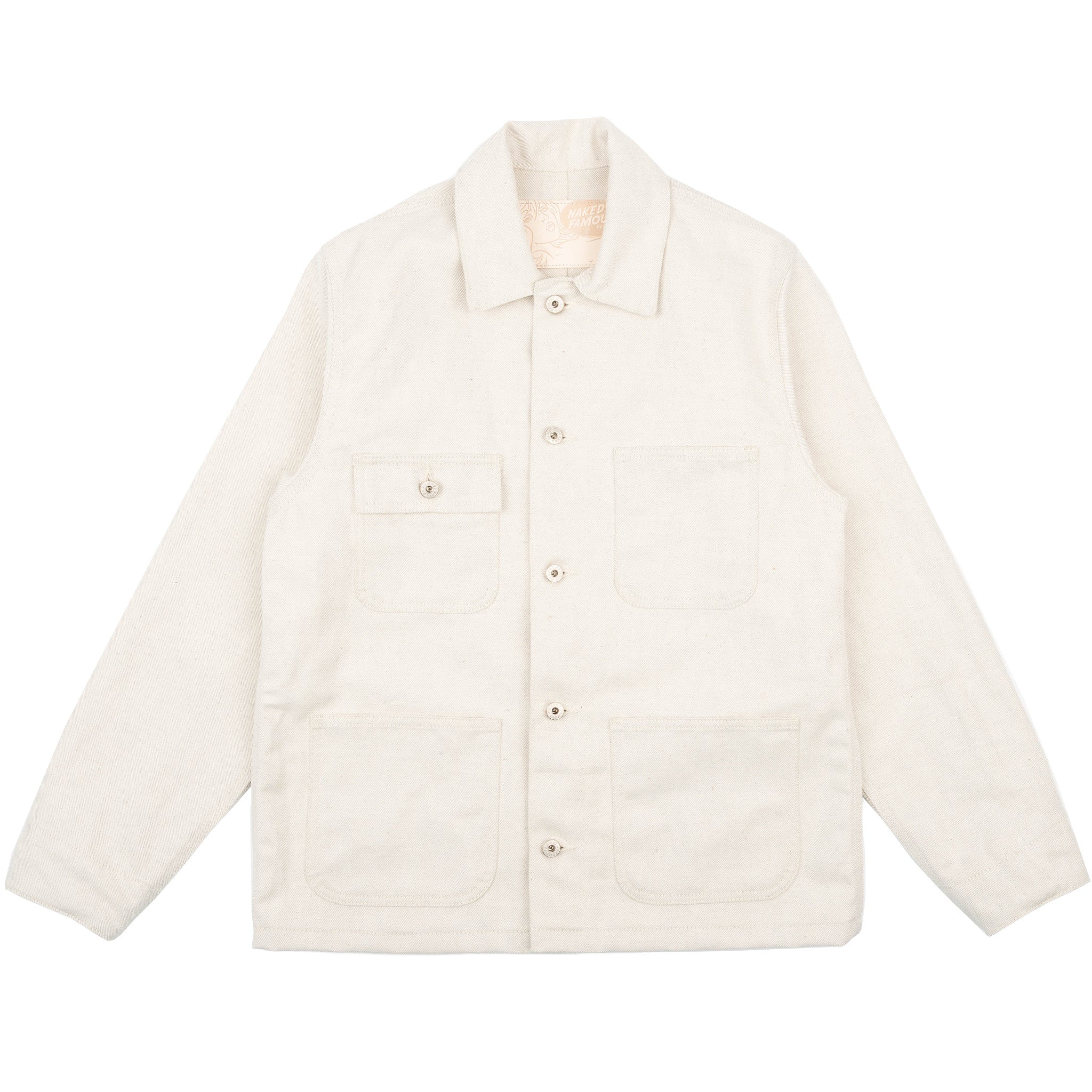
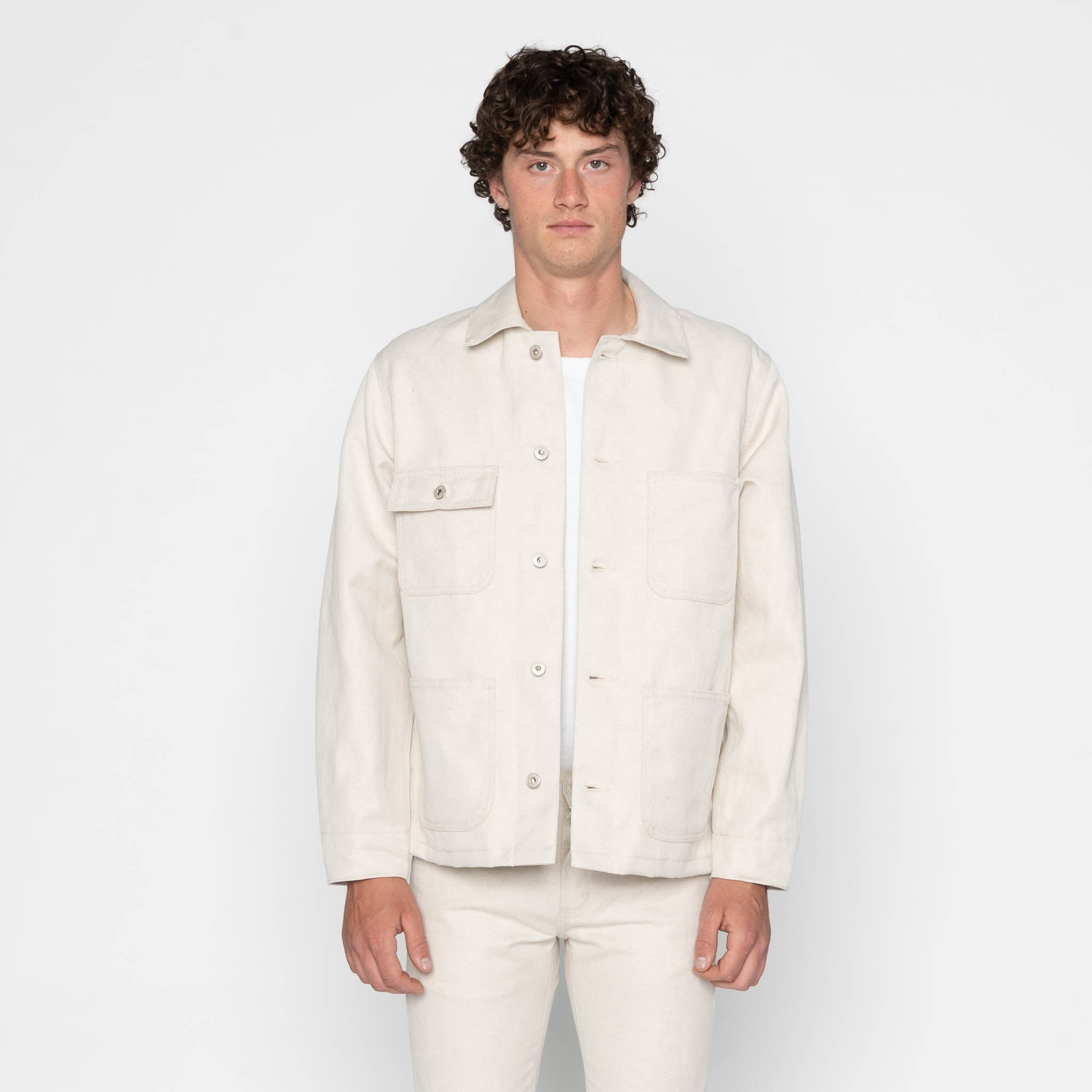
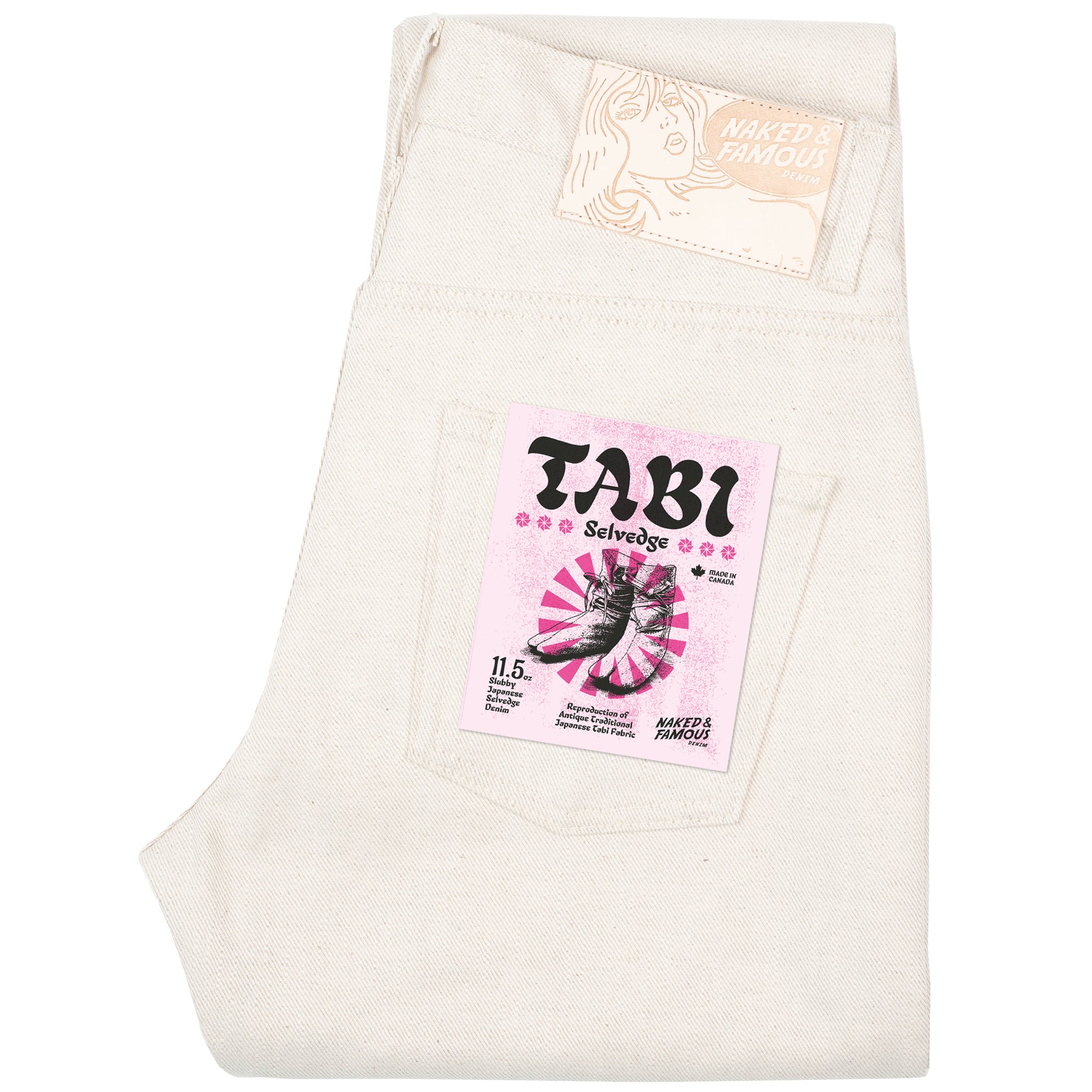
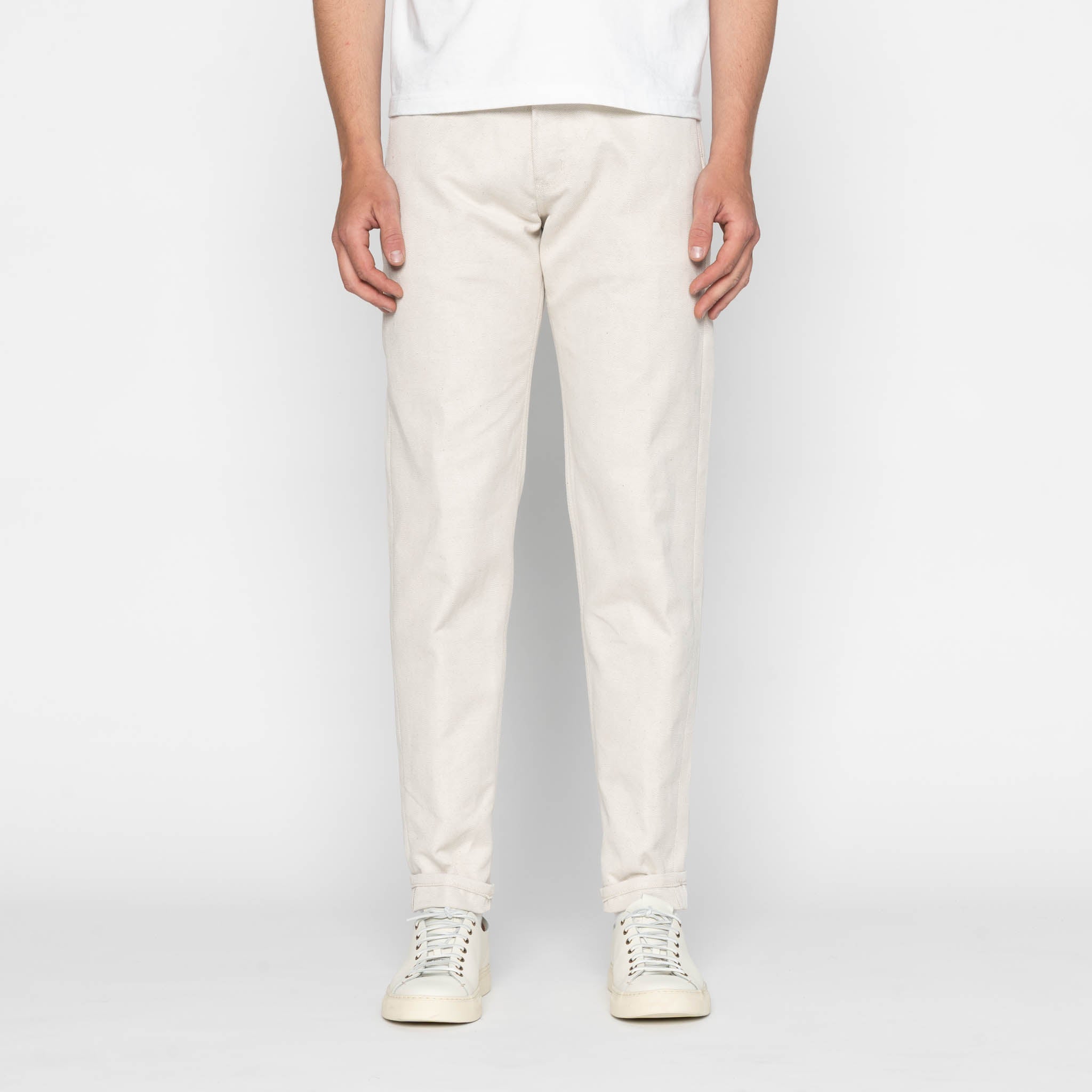
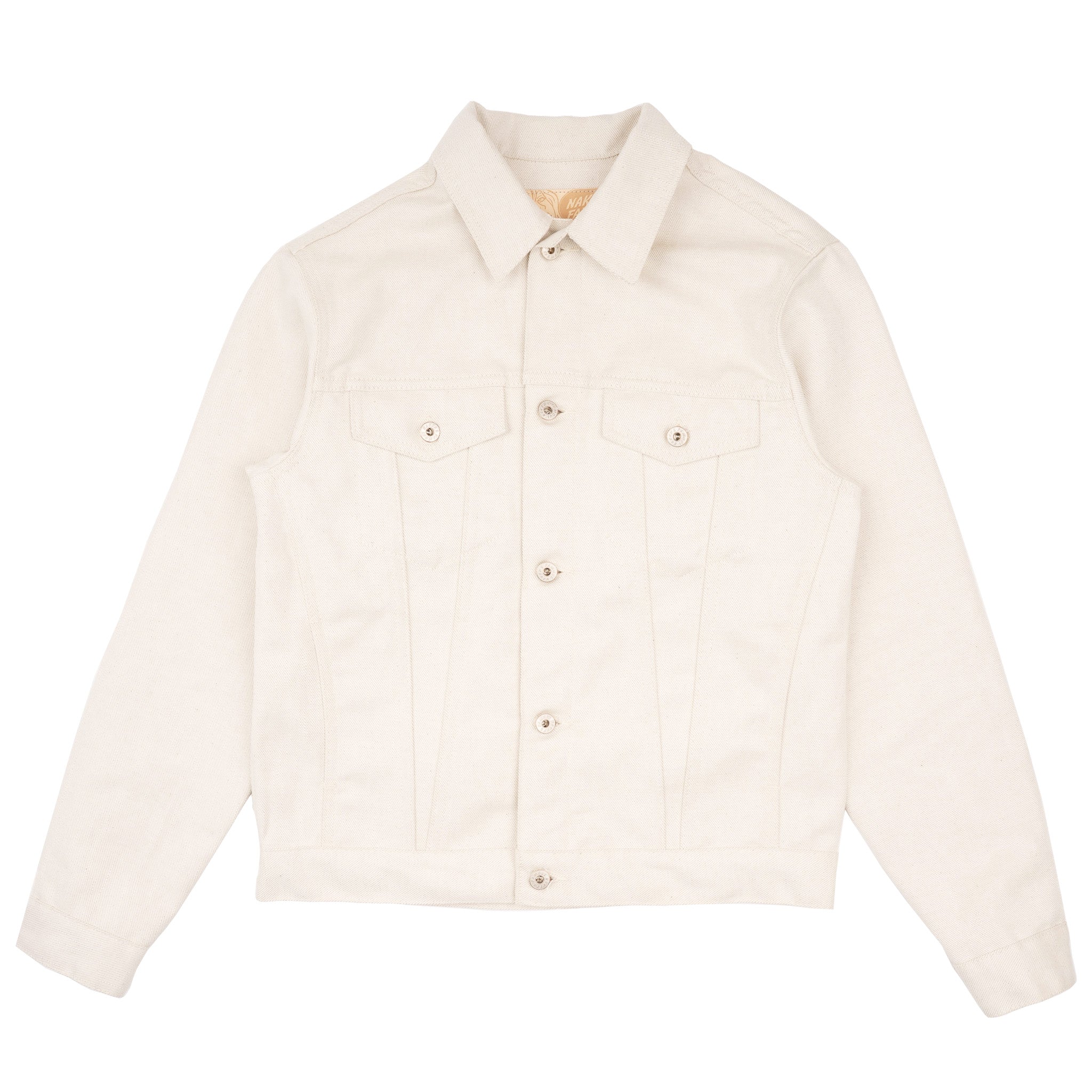
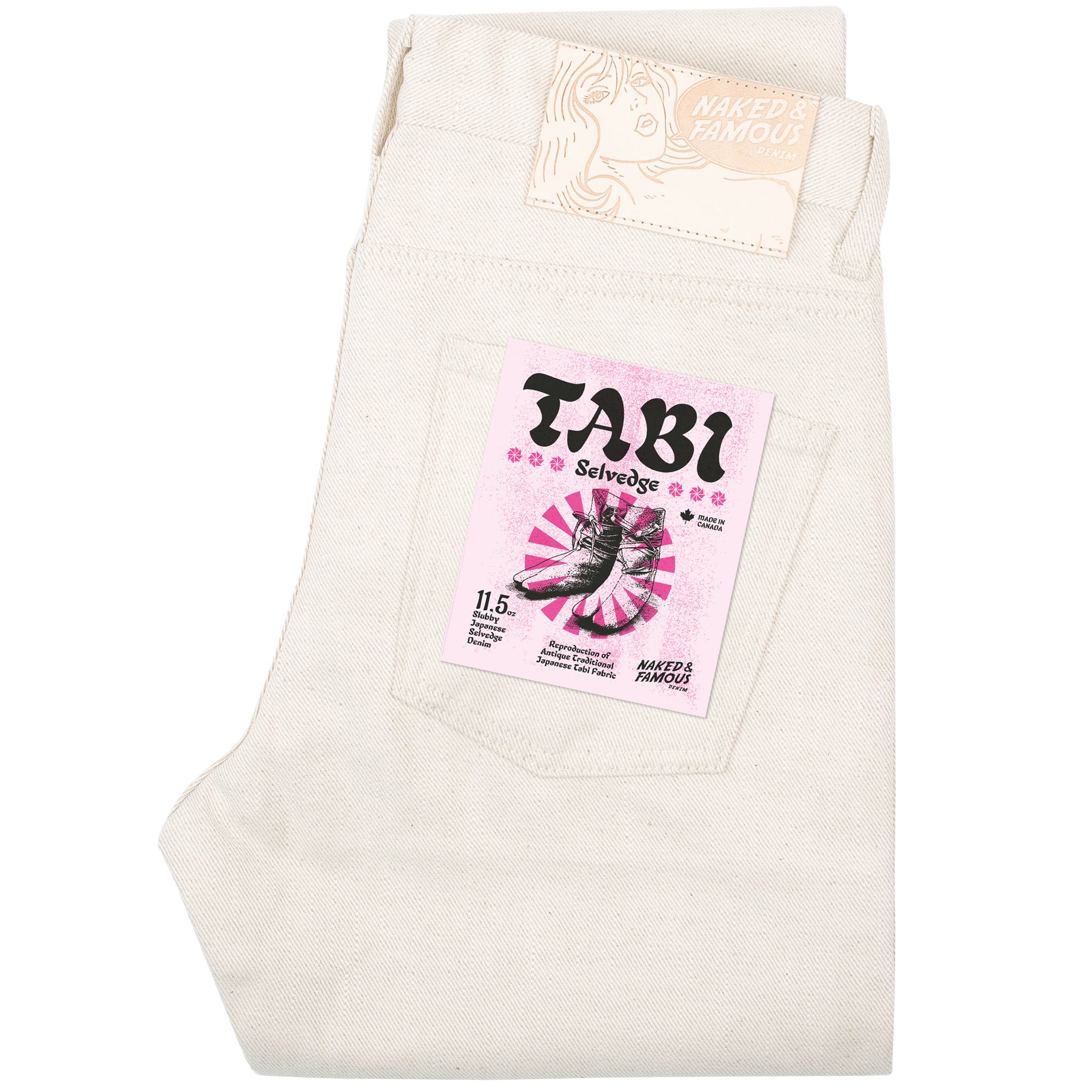
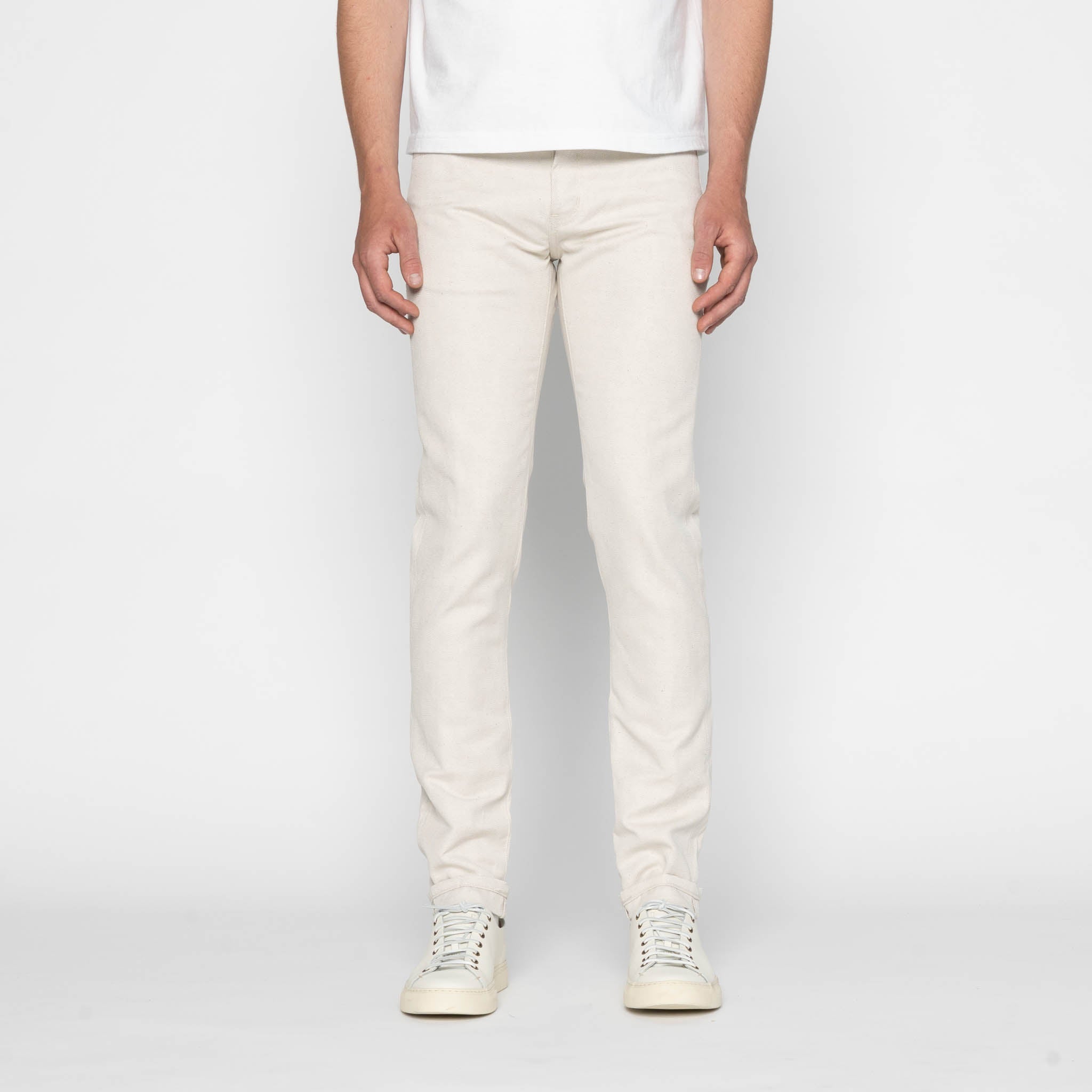
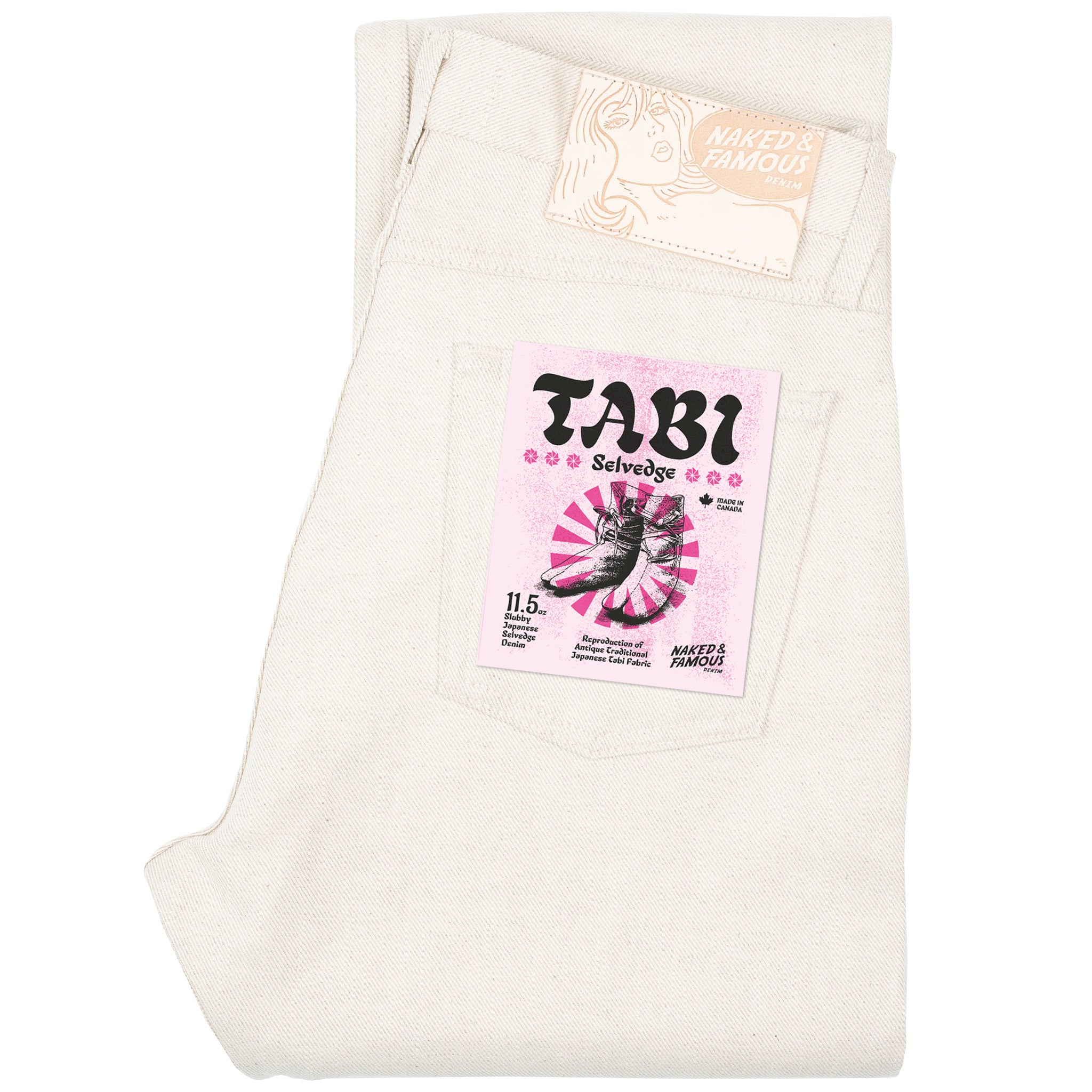
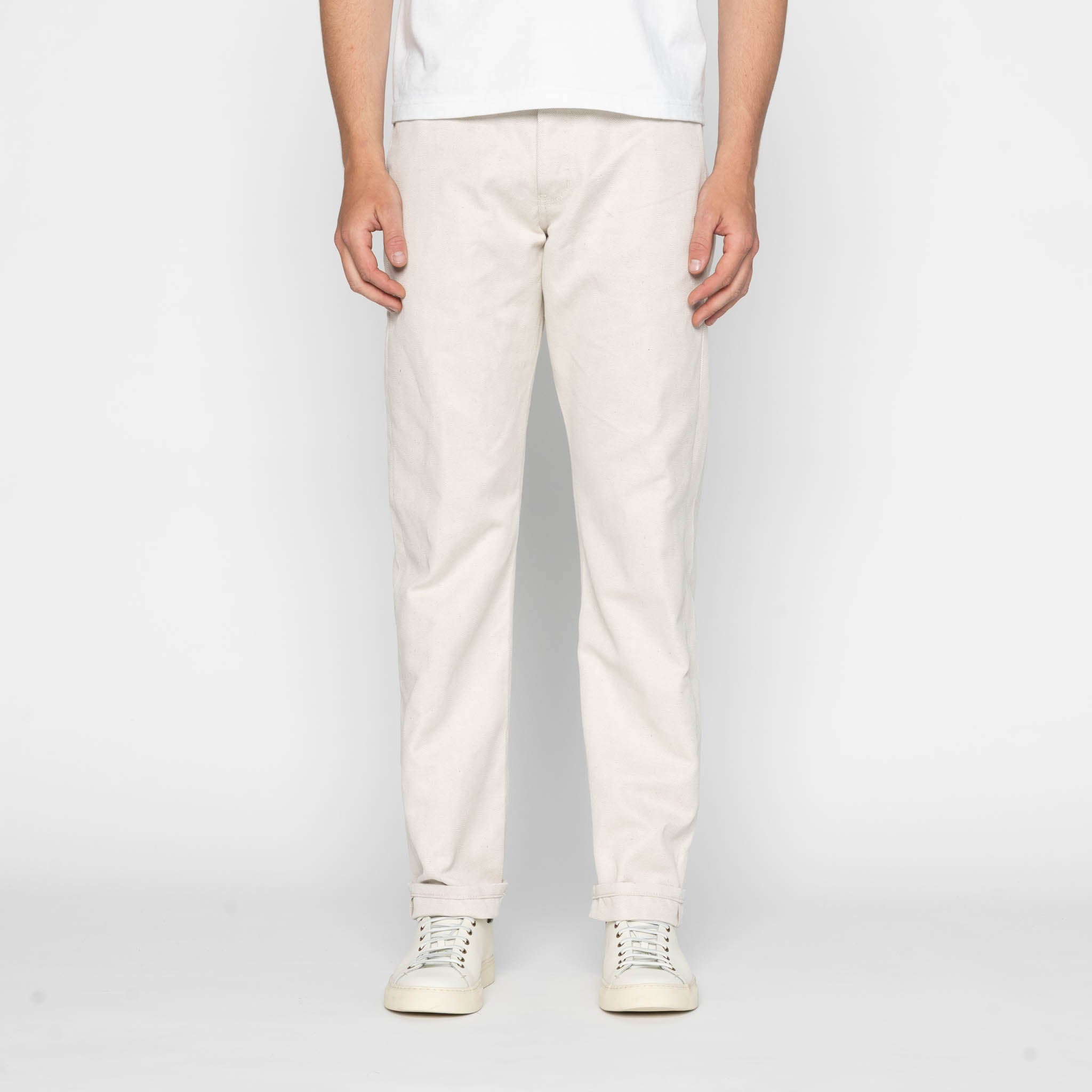
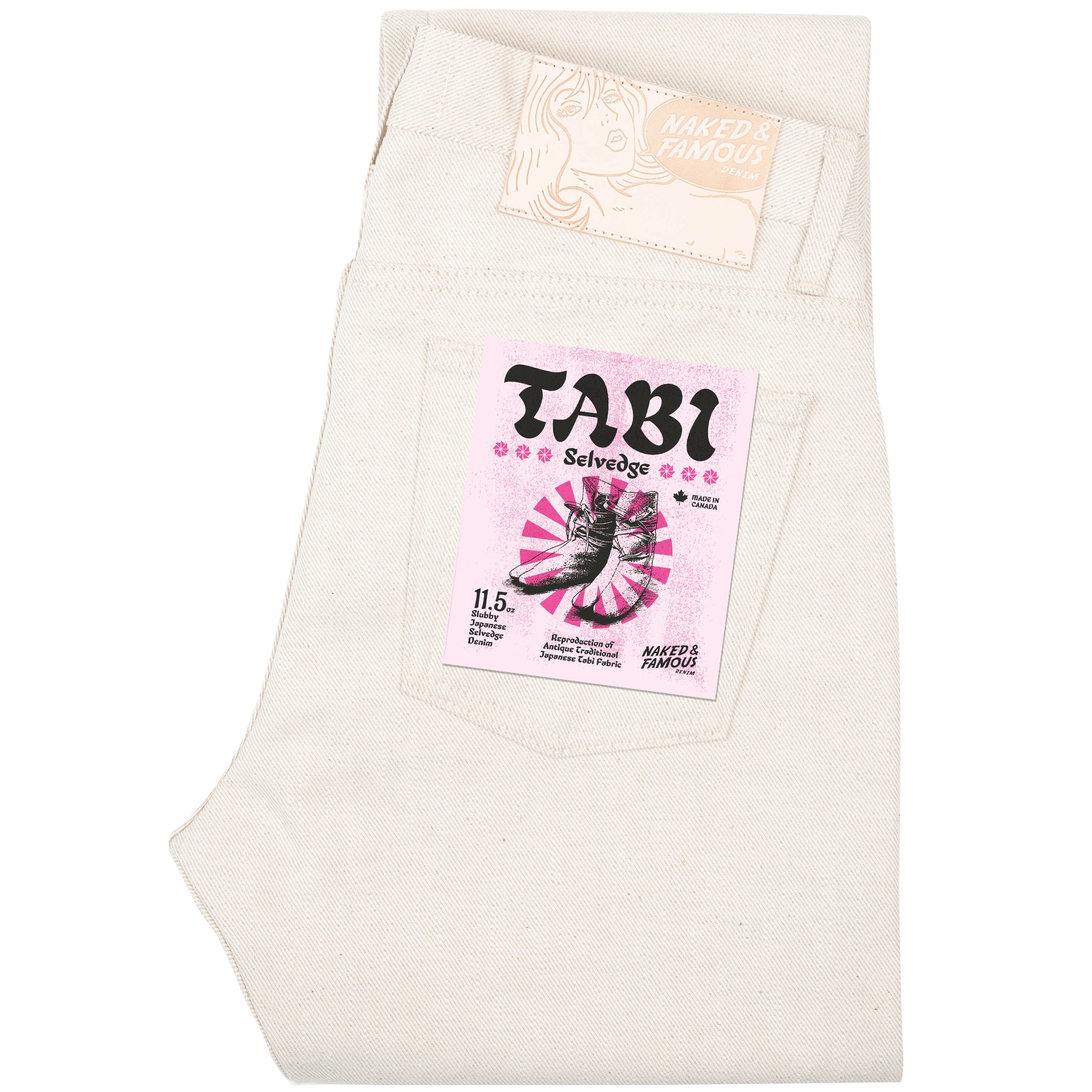
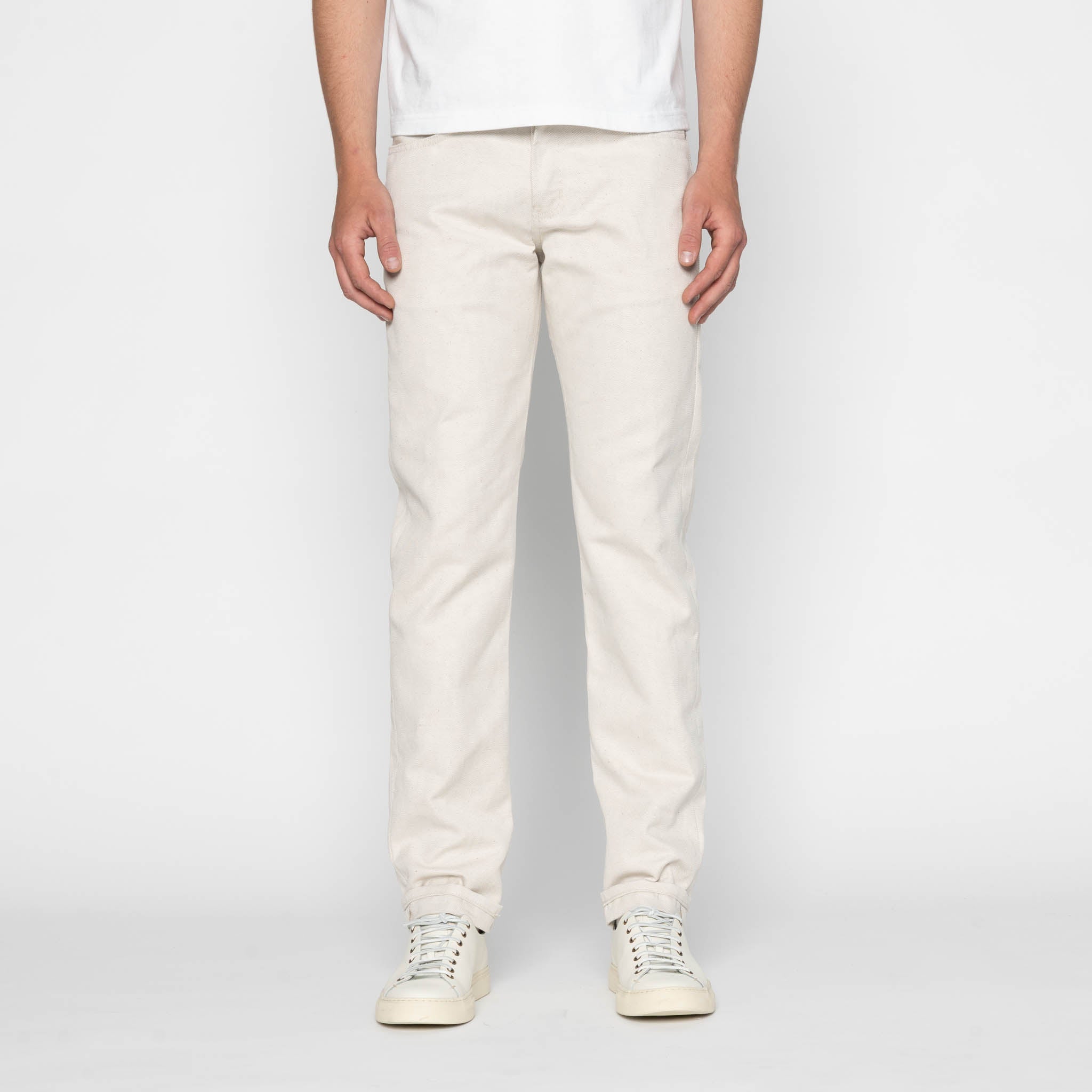
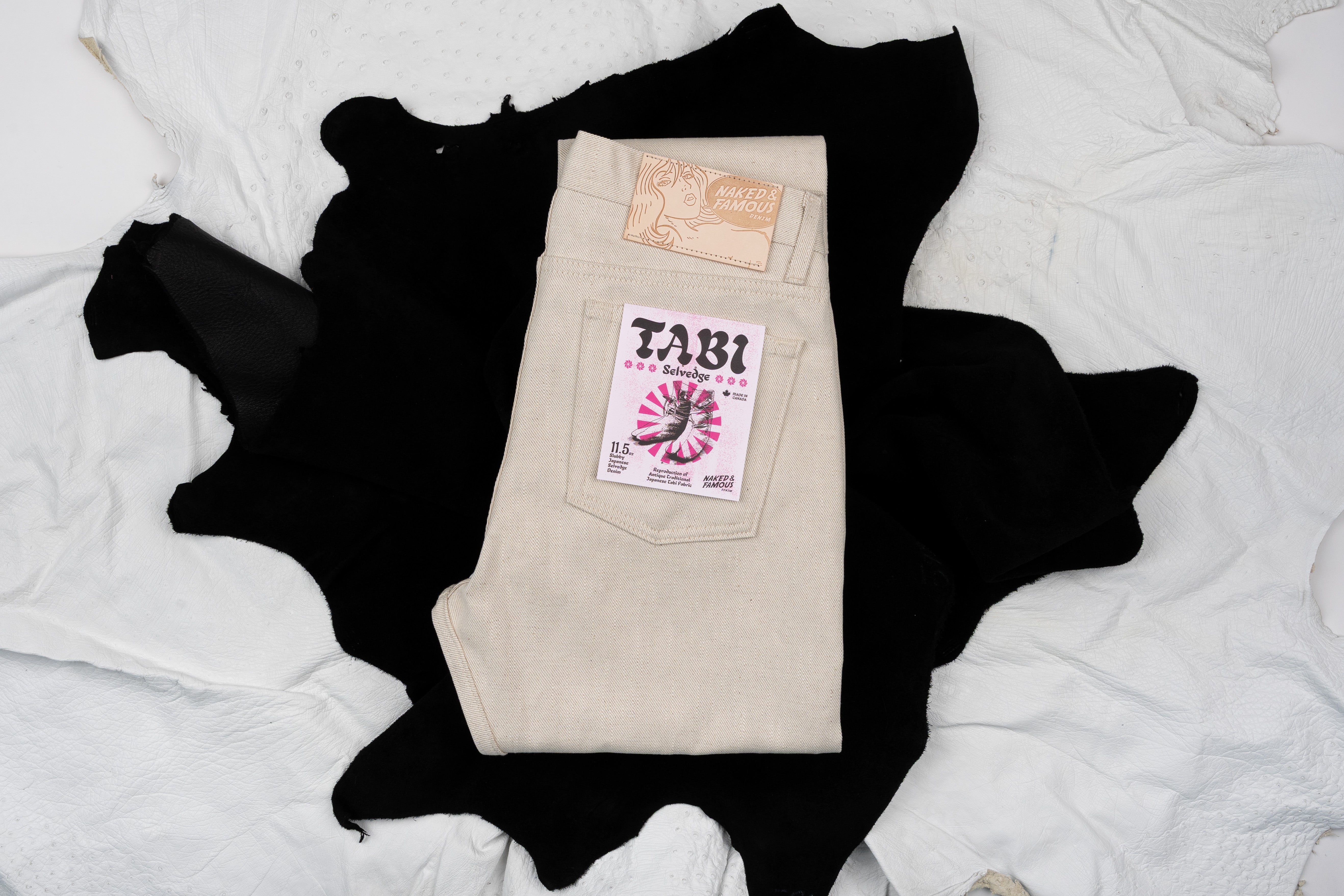
The final composition is 75% cotton and 25% linen, woven into an 11.5oz Japanese selvedge denim.
The color is a natural ecru, left undyed to reflect the tone of traditional tabi fabrics, and for production the selvedge edge was finished with a pale pink detail against that base, subtle but enough to give it a distinct identity.
The Details
The leather patch is natural vegetable-tanned leather. Like the fabric, it starts raw and develops character over time, darkening and softening with wear.
The denim itself begins with a crisp, slightly dry hand due to the linen, then gradually relaxes. It doesn’t fade like indigo denim. Instead, it picks up wear through tone shifts, patina, and texture.
Specifications
- 11.5oz Japanese selvedge denim
- 75% cotton / 25% linen
- Natural ecru (undyed)
- Ecru selvedge with pale pink detail
- Vegetable-tanned leather patch
- Made in Canada
Release
Thursday, April 9 at 11am ET, in the following fits: Super Guy, Weird Guy, Easy Guy, True Guy, Strong Guy, Chore Coat, and Denim Jacket.
Available online and in store at nakedandfamousdenim.com and nakedandfamousdenimnyc.com, as well as through select retailers worldwide.